
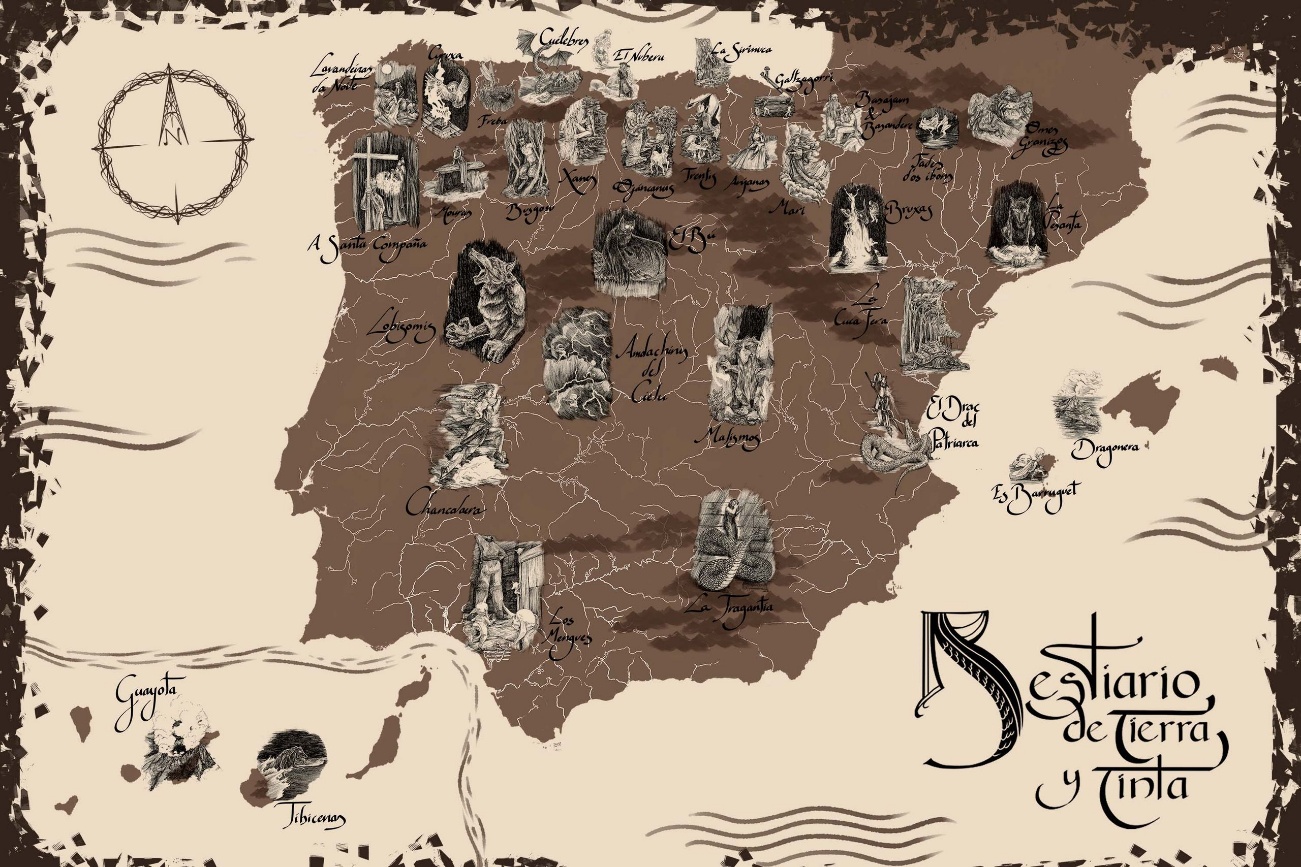
 Illustration by Clara Dies Valls, from the book «Bestiario de Tierra y Tinta» by Andrés Zelada.
Spain is an extraordinarily rich land when it comes to customs, legends, and oral traditions. For this reason, it can often prove challenging to encompass all the stories and folk beliefs woven into our cultural heritage. All too often, we remain unaware of the immense folklore we possess, while being intimately acquainted with myths and creatures imported from across distant borders.
With this article, my intention is simply to shed light on some of these legendary figures. From colossal lizards and dragons to woodland sprites; from the ferocious ogres of the Cantabrian mountain range to the fiery demon lurking in Mount Teide’s crater, Spanish mythology is brimming with beings that mirror our deepest fears, desires, and human yearnings.
Andalusian Mythology
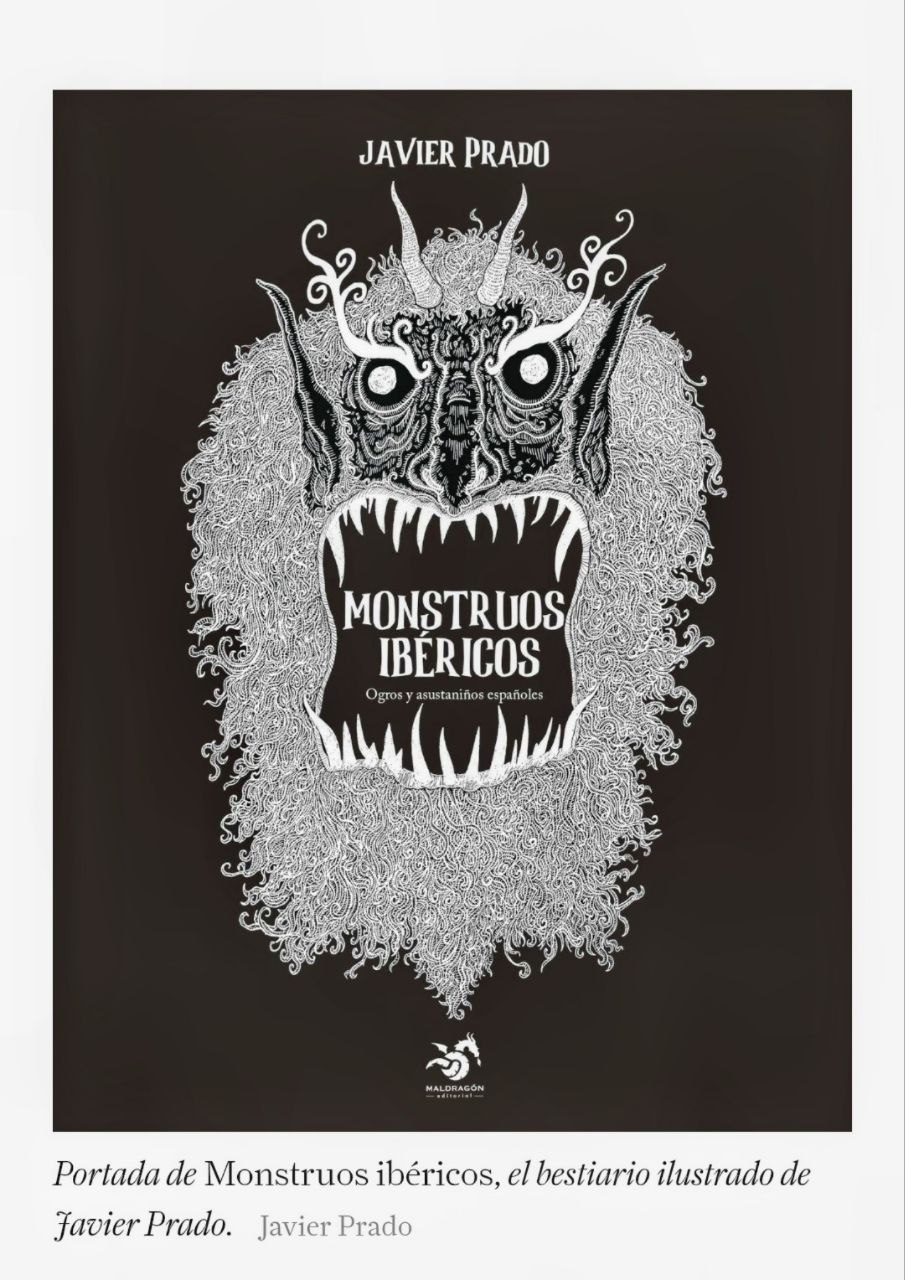
The Martinico
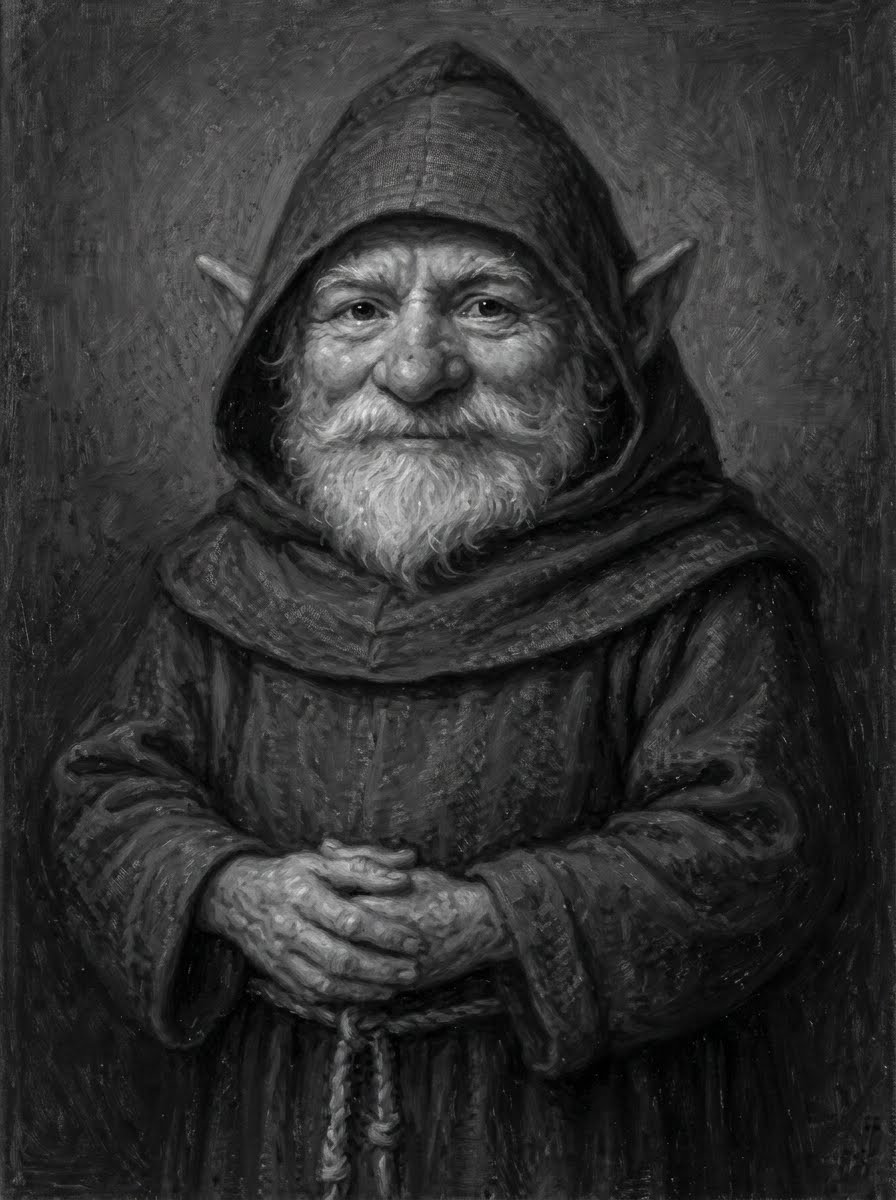
The Martinico is a diminutive goblin with a shadowy reputation. In early chronicles and vintage engravings, these creatures are portrayed as dark, petite figures, often donning a friar’s habit with an oversized hood concealing a grotesque countenance. However, local lore also describes them with a pleasant, childlike face, much like an innocent youth.
This house goblin is infamous for slipping into family homes and shifting everyday objects around simply to play harmless pranks on the dwellers. An elusive entity, sightings of the Martinico are exceedingly rare. According to legend, he was cast out into the woods by an ancient fiend; once his exile ended, he returned to towns to live alongside people and alleviate his loneliness. He shows a distinct fondness for children, finding in them eager companions for games. Despite the chilling guise attributed to him in dark tales, he is at heart a benevolent spirit—in several Andalusian districts, it is believed he roams the streets seeking solitary children to protect.
In darker accounts, however, he wanders through midnight lanes beneath his cowl to startle late-night wanderers. Martinicos are recurring characters in folk tales from Jaén and Granada, lingering in the oral heritage of towns like Arjonilla, Porcuna, Quesada, Pozo Alcón, and Baza.
La Tragantía
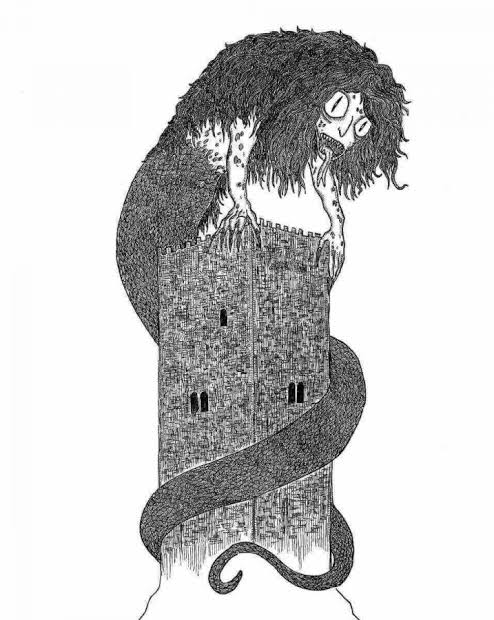
La Tragantía is a haunting, mythological creature from Andalusian folklore, born of a wartime tragedy that centuries transformed into an eerie tale of terror.
Above the waist, she presents the figure of an exquisitely beautiful, dark-haired maiden; below the hips, however, her body stretches into a terrifying, coiled serpent’s tail.
One of the most captivating—and chilling—facets of the Tragantía legend is its historical plausibility. Except for its sorrowful supernatural climax, the events could easily have transpired in the majestic Castle of La Yedra in Cazorla, or any other frontier stronghold. Legend recounts that during the Castilian advances, the Moorish lord fortified himself in Cazorla. Upon learning of the fierce conquest of neighboring Quesada, he chose to withdraw from the fortress with his surviving troops.
Hoping to swiftly recapture Cazorla, he left behind his most treasured possession: his beautiful daughter. He concealed her in a secret subterranean vault carved deep into the living rock—known only to him—stocked with provisions and oil lamps intended to keep her safe until his return. Yet during the retreat, the Moorish ruler and his retinue were slain in battle. The Christian knights took possession of the castle, unaware of the secret buried beneath their feet.
The young princess waited with endless patience in the dark. Days bled into weeks, and provisions dwindled until no hope of rescue remained. Consumed by isolation, damp cold, and growing despair, madness overcame her. Slowly, feeling faded from her legs as they fused into a scaly serpent’s tail, and her famed beauty withered into a reptilian visage.
Ever since, every year on the Eve of Saint John (June 23rd), the beast awakens from the depths and sings a melancholic curse to ensnare the local youth:
«Yo soy la Tragantía,
hija del rey moro;
el que me oiga cantar
no verá la luz del día
ni la noche de San Juan».
(“I am the Tragantía, daughter of the Moorish king; whoever hears my song will see neither the break of day nor Saint John’s sacred night.”)
(Text by Javier Sevilla Martínez)
The Giant Geryon
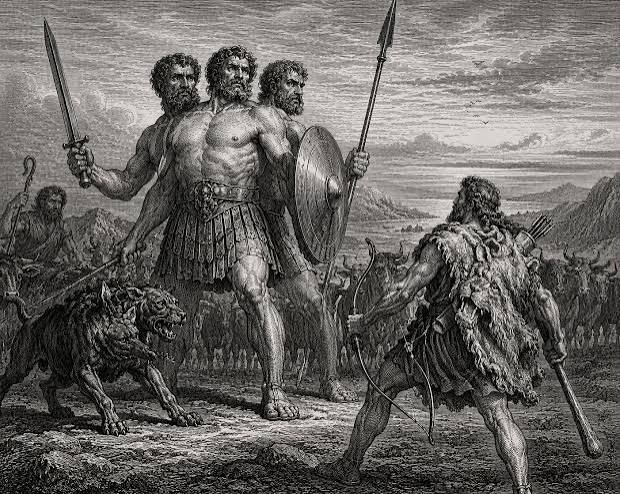
The offspring of Chrysaor and the Oceanid Callirrhoe, Geryon was a colossal being endowed with three humanoid bodies joined at the waist. He dwelled on the mythical island of Erytheia, veiled in the western mists beyond the edges of the Ocean. In his tenth labor, the Greek hero Heracles journeyed to the known world’s outermost reaches, slew the monster with his arrows, and stole his prized herd of red cattle—an adventure celebrated by the lyric poet Stesichorus in his lost epic, the Geryoneis.
The earliest written reference dates back to Stesichorus (circa 590 BC), who placed Geryon’s rock cave opposite Erytheia by the river Tartessos (frequently identified with the Guadalquivir), describing its waters as flowing from «silver roots». Centuries later, the Roman author Avienus reiterated this Tartessian shore location in his Ora Maritima.
Herodotus (5th century BC) situated Erytheia near Gadeira (modern Cádiz), beyond the Pillars of Hercules. Luminaries such as Virgil (The Aeneid) and Strabo echoed this Cadiz connection, with Strabo citing Pherecydes of Syros, who held that Gades and Erytheia were one and the same island. Alternatively, the geographer Pomponius Mela shifted this mythical isle northwards into Lusitanian waters.
Meanwhile, Pompeius Trogus advanced an allegorical reading: Geryon was not a triple-bodied aberration, but three devoted brothers whose harmony was so profound they acted as if guided by a single soul. The commentator Servius interpreted Geryon’s three heads as an emblem of rule over the three Balearic islands (Mallorca, Menorca, and Ibiza).
Dante’s Geryon
In Canto XVII of the Inferno, Dante Alighieri famously reimagined Geryon as the living embodiment of Fraud: a creature bearing the honest, welcoming visage of a righteous man, combined with a serpentine torso, clawed furry paws, and a scorpion’s stinging tail lurking in the abyss. Guiding Virgil and Dante, Geryon circles downward through the gloom between the Seventh and Eighth Circles of Hell—a scene immortalized in Gustave Doré’s evocative 19th-century engravings.
Asturian, Leonese, and Cantabrian Mythology
The Trasgu
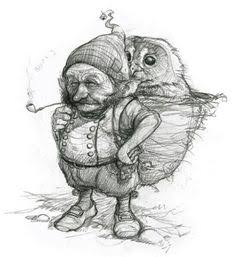
Deriving from the Latin transgredī (“he who transgresses or defies the rule”), this mischievous house sprite goes by various names across northern Spain: trasgo, trasno, or tardo in Galicia; trasgu, Cornín, Xuan dos Caminos, Pisadiel of the Pierced Hand, Gorretín Coloráu, The Red-Capped One, or sumiciu throughout Asturias, León, Cantabria, and eastern Galicia; and trasgo or martinico in Castile and León.
He is envisioned as a nimble, humanoid goblin, often invisible, who dwells indoors among human folk. Sporting dusky skin, a tunic, and a scarlet peaked hat, he typically limps on his right leg, has a tail, and features a distinctive hole piercing the palm of his left hand. By nature, he is boisterous, insolent, and utterly tireless.
In Asturian craftsmanship—most notably around Taramundi—woodcarvers craft figurines of Magikitos, domestic sprites rooted in this lore and revered as guardians of everyday warmth and household joy.
The Trasgu is universally held accountable for mysterious nocturnal clatter: displacing everyday utensils, rattling locked chests, spilling water, spooking horses, and tangling the hair of sleeping couples. While he can be momentarily banished by uttering the names of God or the saints, getting rid of him permanently is near impossible; he often tags along when an exasperated family moves house, poking his red hat out of a trunk to proclaim: «I too am moving house!»
Folklore teaches that the sole method of ridding oneself of his mischief is assigning him an impossible task that wounds his pride: bringing water in a wicker sieve, bleaching a black ram’s fleece white, or picking up a heap of millet seeds from the floor. As the tiny grains slip endlessly through the hole in his hand, the Trasgu storms off in utter shame, never to return.
The Xana
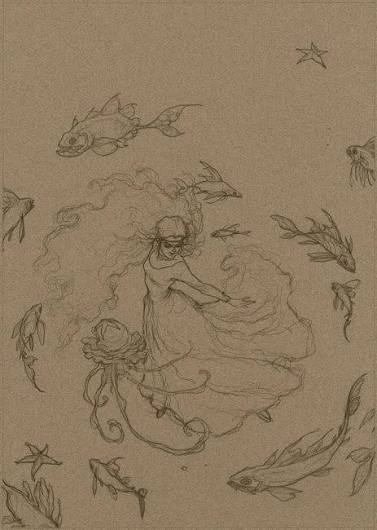
The xana (or jana) is one of the most enchanting figures in Asturian and Leonese folklore. The name designates a timeless sisterhood of water fairies haunting clear mountain springs, waterfalls, riverbanks, and hidden grottos.
Their presence has left an indelible imprint on the geography of northern Spain, exemplified by the breathtaking Desfiladero de las Xanas gorge in Asturias.
In his celebrated work The Witches and Their World, anthropologist Julio Caro Baroja linked the xana myth to archaic worship of the Roman goddess Diana (Artemis), revered throughout ancient Europe as the guardian of untamed nature, forest glades, and freshwater sources. Indeed, in medieval Iberia, jana was a common term for enchantresses and nature-bound sorceresses.
The Cuélebre
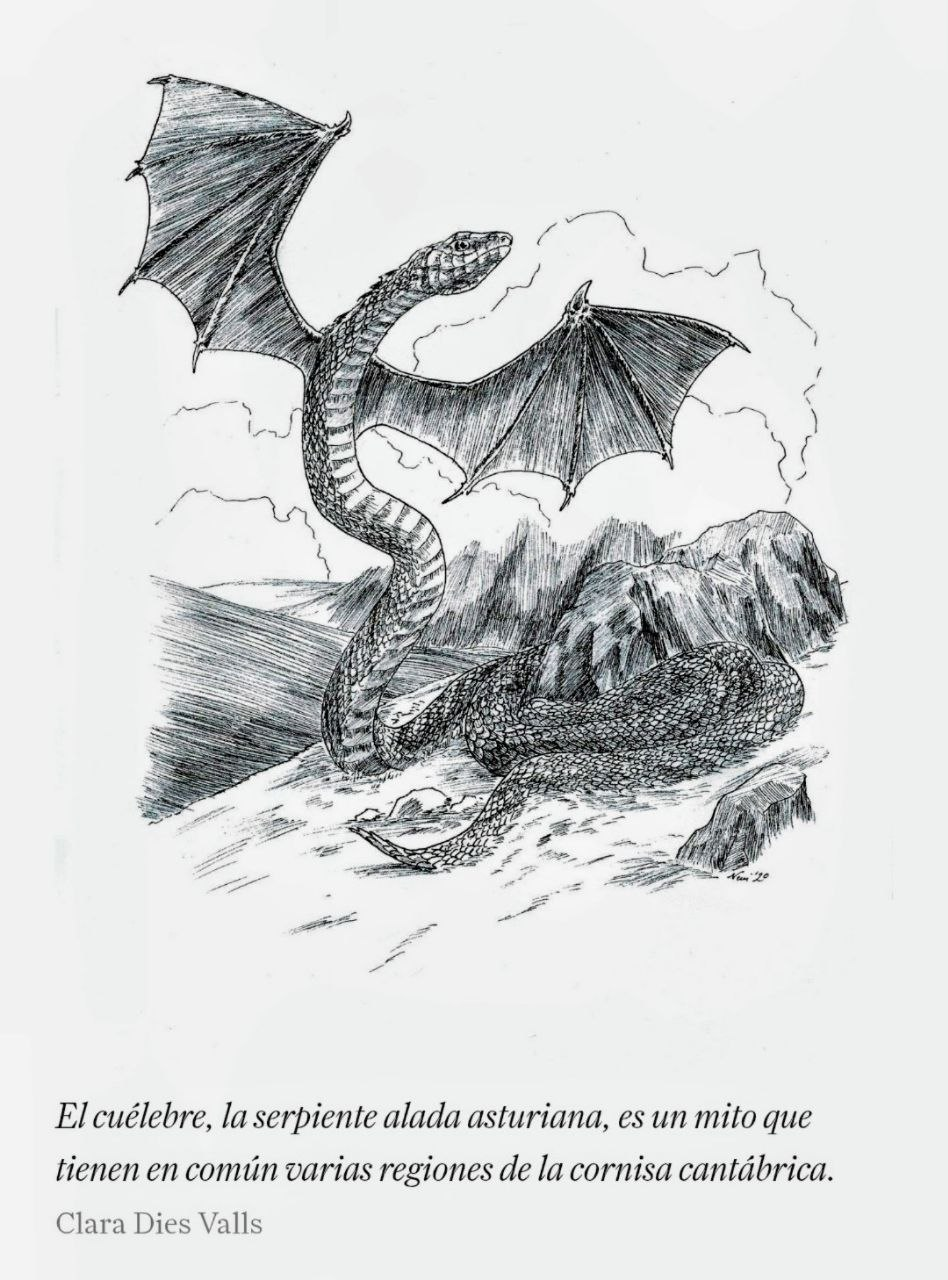
The cuélebre is the formidable serpentine dragon of Asturian, Leonese, and Cantabrian lore (where it is known as culebre, culuebro, or sierpe). Bearing an elongated dragon body covered in impenetrable green scales, blazing eyes like burning embers, and leathery bat wings, it strikes terror into all who encounter it.
Its primary purpose is guarding ancient, hidden treasures (ayalgues in Asturian). Fortune hunters in bygone centuries relied on esoteric guides known as lliendas or lendas in their quest to locate the hoards (la gueta l’ayalga).
The cuélebre emits a bloodcurdling hiss and frequently preys on nearby livestock and unsuspecting travelers. To prevent rampage, villagers offered it tribute, usually baked bread loaves or livestock carcasses. Its sole vulnerability lies at the soft underside of its neck, the only patch of skin left unguarded by impenetrable scales. Legend holds that as these dragons age, they sink to the depths of the sea to guard their gold in peaceful eternity.
Catalan Mythology
The Pesanta
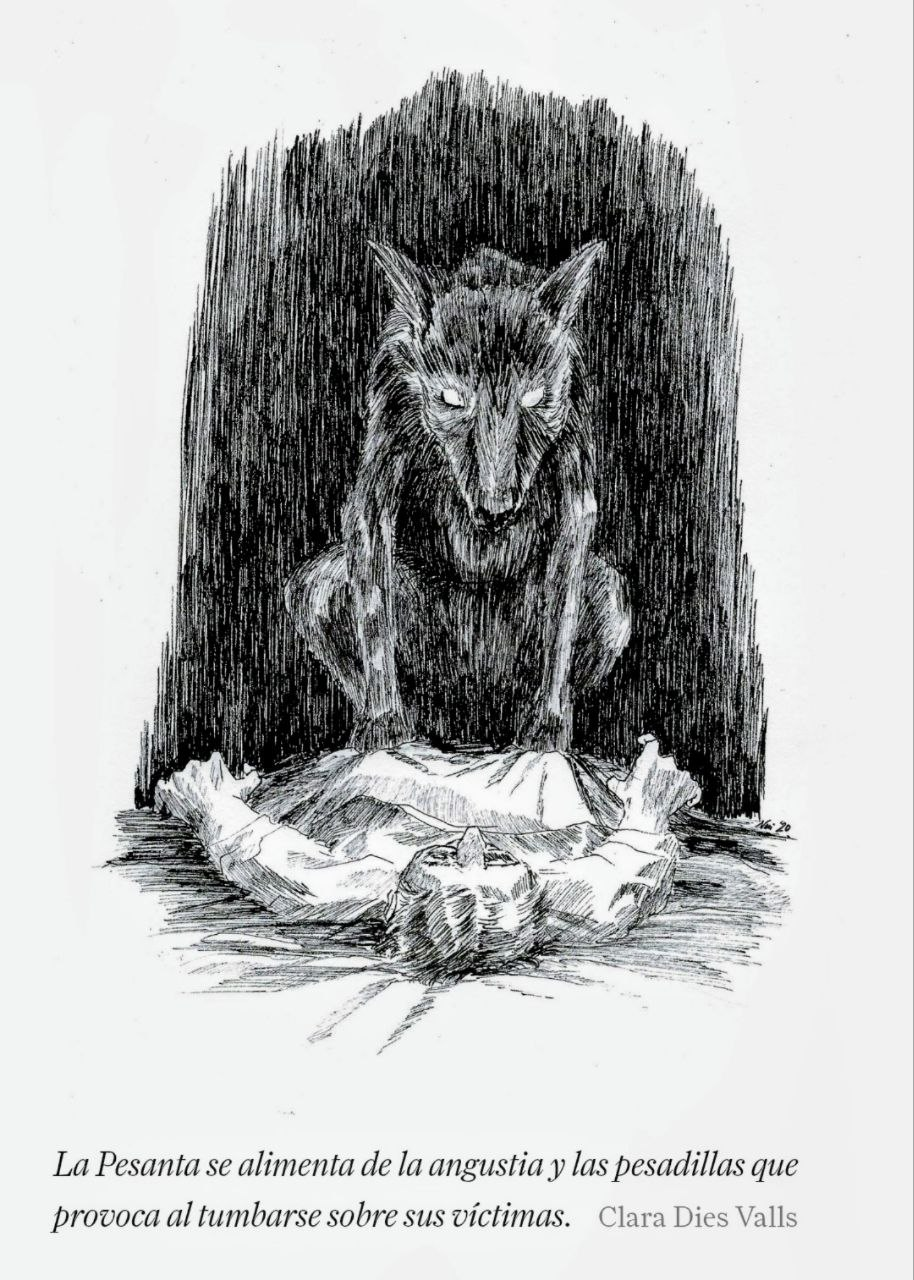
In traditional Catalan folk belief, the Pesanta is a nocturnal animal-demon appearing as a giant black hound (or, more rarely, an ominous, shaggy cat). It slips silently into bedrooms through keyholes and window crevices to settle upon sleeping victims’ chests, inducing suffocating pressure, sleep paralysis, and horrifying night terrors.
Belief in the Pesanta gained enormous traction between the 14th and 15th centuries following severe earthquakes that ravaged Catalonia. These geological upheavals split cracks into hillsides that superstitious medieval peasants termed the «chasms of hell», convinced that infernal fiends had broken through into the mortal realm—chief among them the suffocating Pesanta.
Basque Mythology
The Tártalo (Tartalo, Anxo, or Torto)
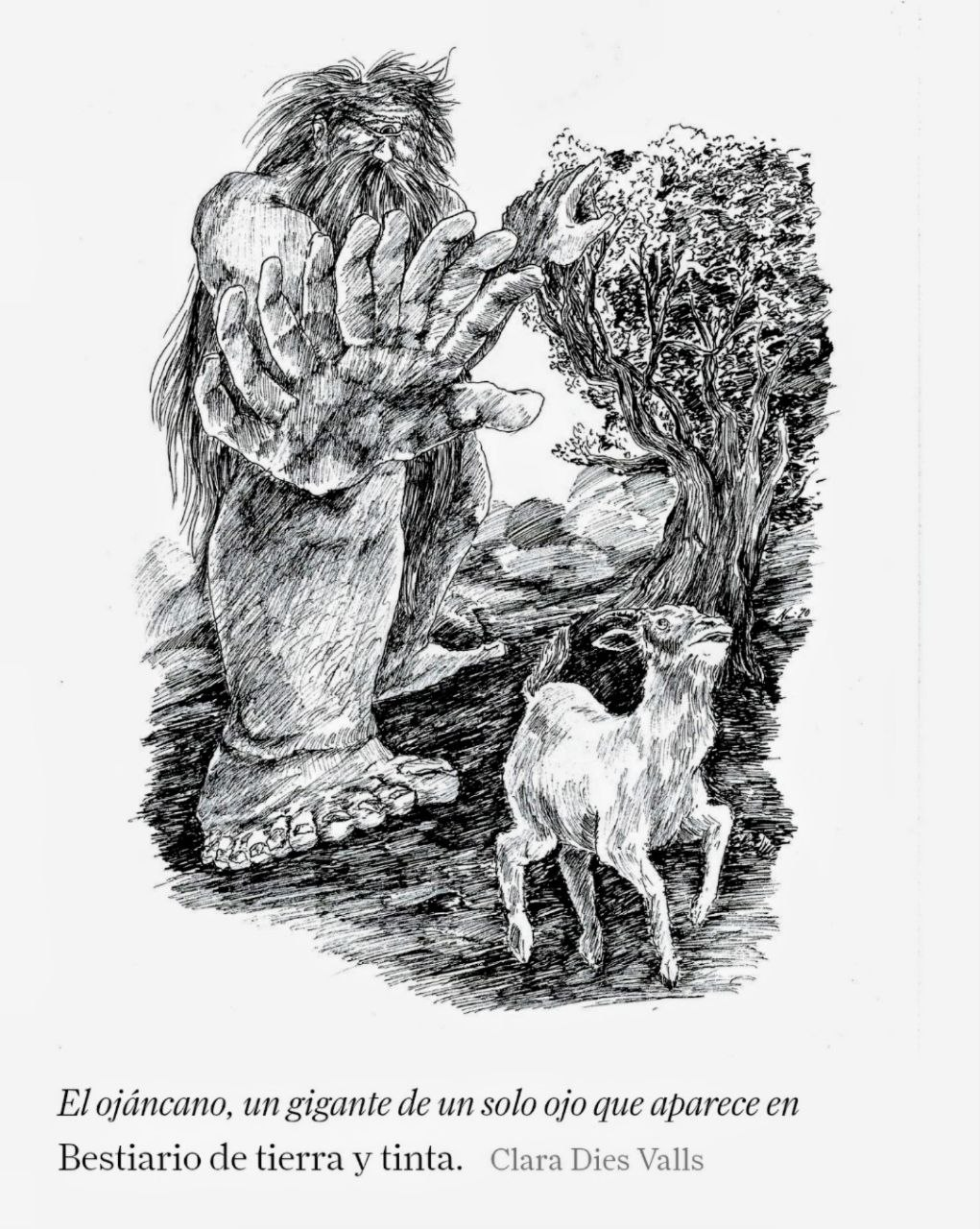
Across the Basque mountains, this one-eyed shepherd cyclops is notorious for his cannibalistic hunger and titanic strength. His name struck dread into mountain settlements, where he was blamed for abducting young shepherds and travellers to feast upon them.
The creature shares unmistakable ties with Greco-Roman lore, evoking Tartarus and Homer’s Polyphemus in The Odyssey. Inherited and reshaped through centuries of Roman contact, the word evolved from an infernal pit into a fearsome giant. In Cantabria and Castile, he finds his counterpart in the Ojáncano.
A well-known legend tells of two hunter brothers caught in a mountain storm who sheltered inside an immense stone cabin. At nightfall, Tartalo arrived with his flock, sealed the entrance with a boulder, and immediately roasted the elder brother over the fire. While the monster slept off his meal, the younger brother, Antimuño, heated the iron spit red-hot and plunged it into Tartalo’s single eye. Blinding and roaring in agony, the cyclops opened the cavern, feeling each sheep between his legs as they exited; Antimuño threw a sheepskin over his back, crawled out undetected among the flock, and lured the pursuing monster into a deep chasm, where the giant drowned because he could not swim.
Cantabrian Mythology
The Ojáncano
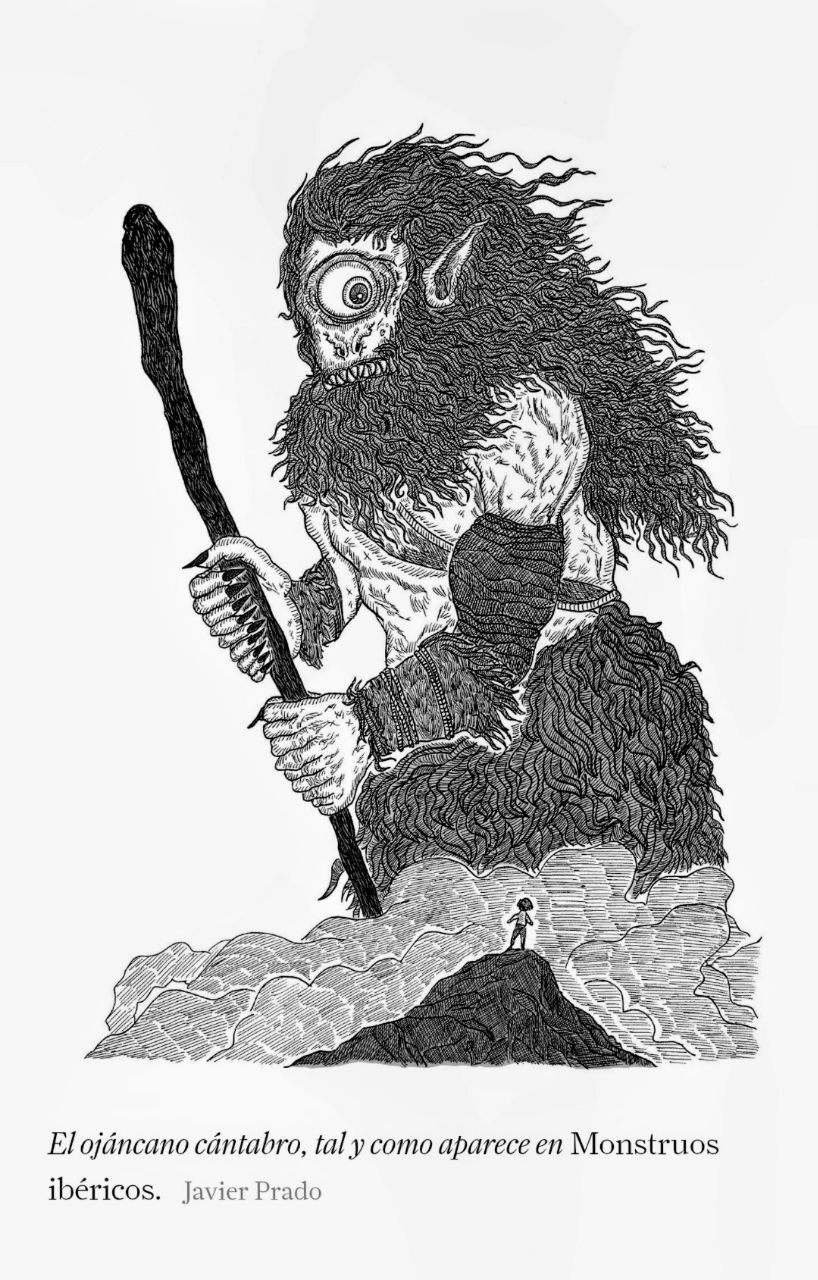
The paramount monster of Cantabrian folklore, the Ojáncano embodies the destructive fury of nature and unmitigated malice. A colossus with a booming voice like thunder and a single glowing eye in the middle of his forehead, his body is matted with coarse, fiery-red hair. Hidden within his dense beard lies his sole vulnerability: a solitary white hair. If an adversary manages to pluck this strand after blinding his eye, the brute collapses dead on the spot.
He typically possesses ten digits on each hand and foot, along with a double row of predatory teeth. He harbors a mortal terror of barn owls and flying toads; the brush of one such toad causes his death unless he immediately applies hazel leaves soaked in fox’s blood.
Dwelling in deep mountain caves barred by boulders and brambles, he was blamed for natural disasters across Cantabria: uprooting ancient trees, plugging sweet springs, sending landslides into pastures, and breaking bridges. Yet tradition records that once every century, a gentle, benevolent Ojáncano is born to warn villagers of the coming wrath of his kin.
A classic Cantabrian folk verse captures the dread he inspired:
«Ojalá te quedes ciegu,
ojáncanu malnacíu,
pa arrancarte el pelu blancu
y te mueras maldecíu».
(“May you go blind, ill-born Ojáncanu, so we can pluck your single white hair and watch you die under a curse.”)
Galician Mythology
The Santa Compaña
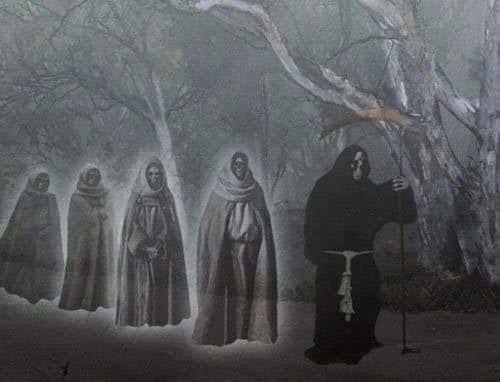
Few peninsular legends cast as profound a chill as Galicia’s Santa Compaña. Entwined with crossroads, parish cemeteries, and the pilgrimage paths of the Camino de Santiago, it represents a spectral midnight procession of tormented souls foretelling impending death or spiritual penance.
As chronicled by physician and folklore scholar Xesús Rodríguez López in Supersticiones de Galicia (1895), the Compaña gathers souls from Purgatory on an eerie nocturnal march. Draped in black cowls and shrouded tunics, they advance in two silent files carrying lighted tapers that cast no mortal light. Leading the phantom host is the Estadea, who forces an unwitting living mortal to march ahead holding an iron cross and holy water cauldron.
This cursed leader remembers nothing by daylight, yet his vigor steadily erodes: his complexion turns pale and ashen as his life force drains away night after night. His only hope of salvation is encountering another nocturnal wanderer on the road and passing off the cross before exhaustion claims him.
Valencian Mythology
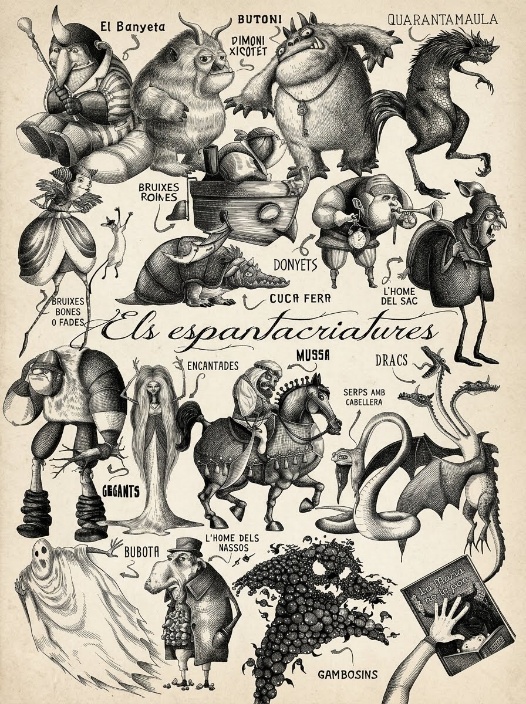
Valencian folklore is rich in imaginative beings, river sprites, and nursery phantoms that guarded orchards and haunted the Mediterranean nights:
- L’Home dels Nassos (“The Man with Many Noses”): A curious character with as many noses as days remaining in the year. He sheds one nose each morning and can only be glimpsed on New Year’s Eve, when he has only one left and effortlessly blends into the bustling town crowds.
- Els Nyítols: Microscopic creatures that slip into the ear canals of slumbering people to feed upon their most precious memories.
- El Caro: A shepherd cursed by the deities for his cold arrogance, transformed into an owl doomed to spend eternity calling out into the darkness for his lost flock.
- El Trib Real: A troupe of enchanted dancers floating in the twilight shadows, paying for excessive festive hubris with an unending reel.
The Washerwoman (La Mujer Lavadora)
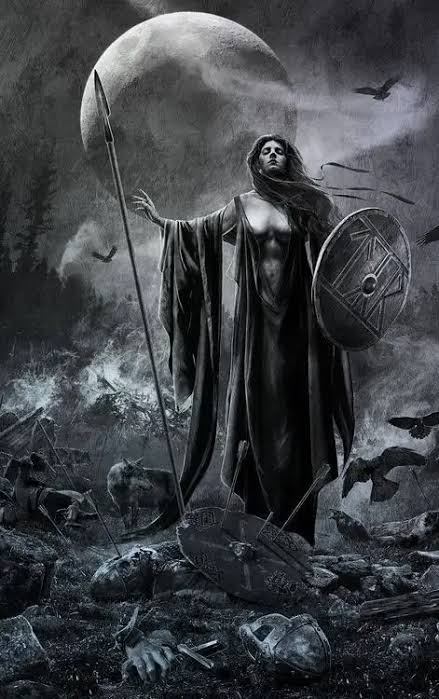
Near irrigation canals and communal washhouses, locals feared crossing paths with the Dona de l’aigua or Washerwoman: an emaciated crone clad in mourning weeds who rinses her cloths beneath the moon, threatening to sink her fangs into anyone who intrudes upon her solitary vigil.
- La Serp: In rural Valencia, enormous serpents were feared as emissaries of evil, reputed to slither into farmhouses at night to suck milk from nursing mothers, leaving infants to languish.
- La Quarantamaula: A shape-shifting chimera manifesting as a giant snail, a vicious feline, or a clawed feathered beast, known for pelting gravel at windows of disobedient youngsters.
- Els Butonis: Fearsome, roaring night-devils invoked by elders to instill obedience in rowdy children before bedtime.
- El Garrofer: A demonic spirit trapped within the trunk of an ancient carob tree after being outsmarted in a wager by a cunning peasant.
Island Mythology (Canary Islands)
Guayota
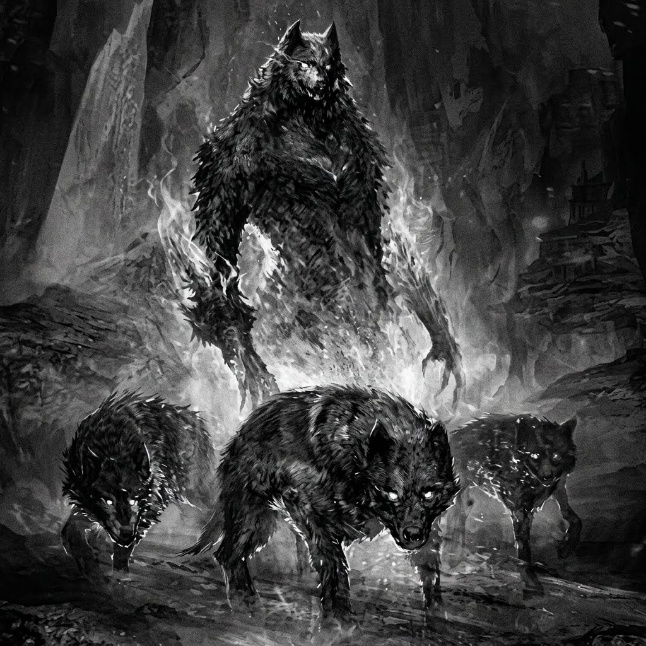
To the aboriginal Guanches of Tenerife, Guayota (wa-yewta, “the Striker” or “the Destroyer”) represented the supreme force of destruction and fire. He dwelled in the churning depths of Mount Teide, which the islanders called Echeyde and viewed as the subterranean realm of the underworld.
Early Spanish chroniclers left key accounts of this belief. In the 16th century, friar Alonso de Espinosa observed:
«They recognized an inferno, believing it was inside the peak of Teide; they called this underworld Echeyde, and the demon Guayota…»
Chronicler Antonio Sedeño likewise recorded that the Guanches deemed the fiery volcano an infernal domain ruled by the destroyer of peaks. In the 17th century, historian Tomás Arias Marín de Cubas reiterated that Guayota reigned where «volcanoes, fire, and sulfur» met.
In the 19th century, historian Juan Bethencourt Alfonso gathered oral traditions describing minor demonic entities that served Guayota—such as Guañajé, Canajá, and Jucancha—protective spirits of livestock and howling gales. Resembling the Hawaiian goddess Pele within Kīlauea’s caldera, Guayota embodies volcanic reverence, a fact substantiated by ancient food vessels and offerings discovered within Mount Teide’s volcanic tubes.
Extremaduran Mythology
La Serrana de la Vera
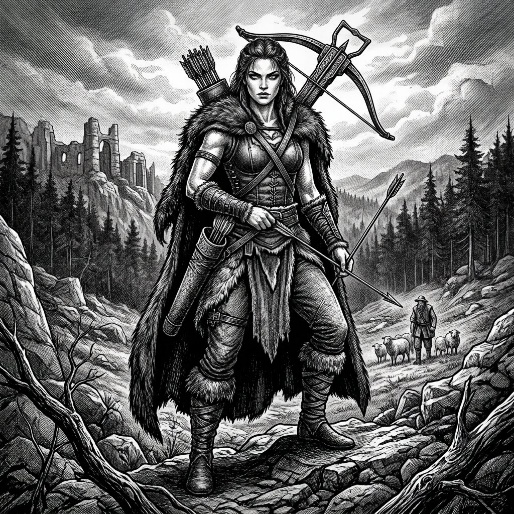
La Serrana de la Vera is one of the most striking figures in Iberian legend: a huntress of superhuman stature, untamed beauty, and formidable prowess who inhabited the crags of La Vera, luring solitary men to her mountain cave before slaying them.
Rooted in medieval frontier ballads (serranillas) and forest-hunting deities (akin to Diana or the Hurdan Chancalaera), the Serrana blends savage beauty with primal terror. Anthropologist Caro Baroja debated whether she represented an archaic mountain goddess transformed into folk legend, or a real historical bandit mythologized over time. Feats of hurling giant boulders and huge footprints preserved in the rocks of Garganta la Olla are attributed to her strength.
Many researchers connect the myth with pastoral transhumance between the Tormantos range and Monfragüe. In 1774, scholar Antonio Ponz documented twenty-eight crosses in the Puerto de la Serrana pass, traditionally dedicated to her victims or to bandits who roamed those solitary paths.
The Serrana in Classic Literature
The Spanish Golden Age celebrated and adapted her legend:
- Lope de Vega penned La Serrana de la Vera, setting the drama in the reign of Emperor Charles V and casting the heroine as Leonarda, a slighted noblewoman who eventually seeks redemption.
- Luis Vélez de Guevara crafted a version closer to traditional ballads in 1603, portraying Gila of Garganta la Olla as an athlete of astounding strength who enacts fierce vengeance on men before meeting a tragic fate.
- José de Valdivielso adapted the story into an auto sacramental (sacred mystery play) in 1619, transforming the tale into an allegory of the human soul tempted by worldly Pleasure and salvaged by heavenly Disillusionment.
Castilian Mythology
The folk beliefs of Castile and León and Castile-La Mancha weave together Celtiberian, Visigothic, and Mozarabic heritage preserved through centuries of oral storytelling across high plains and mountain ridges:
- El Tragaldabas: A gluttonous ogre with an insatiable appetite, celebrated in carnival processions to playfully frighten children with his cavernous maw.
The Malismos (or Morgos)
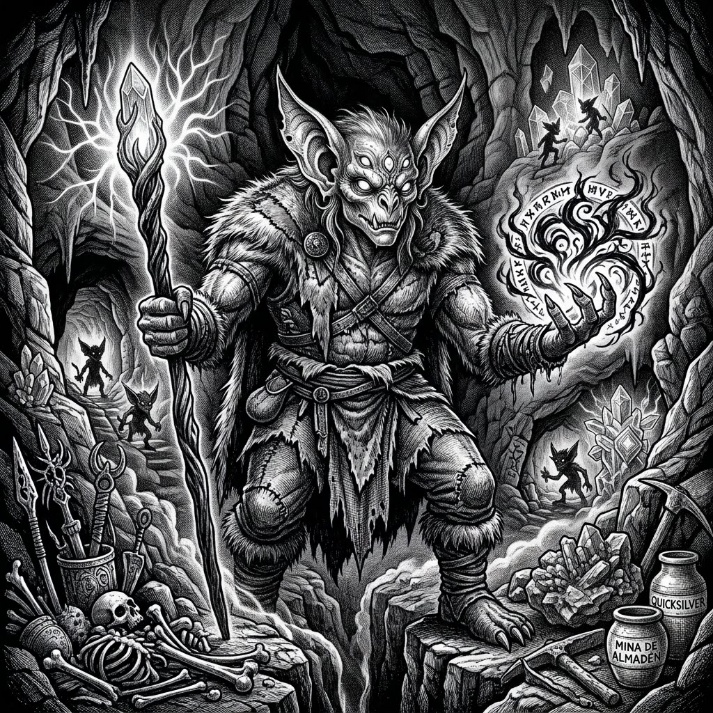
Regarded as the most elusive and hazardous goblins in La Mancha, these subterranean creatures inhabit the deep shafts of mining towns like Almadén, wielding obscure underworld witchcraft.
- The Martinicos: Hooded brown-robed sprites specializing in household mischief, nocturnal restlessness, and displaced tools.
- The Enemiguillos: Whirling clouds of miniature winged goblins that race across the Castilian plateaus, kicking up dust devils and playing tricks on travelers.
- The Oricuerno (or Alicornio): A medieval Iberian variation of the unicorn, endowed with cleansing properties and guardian of sacred springs.
The Saetón
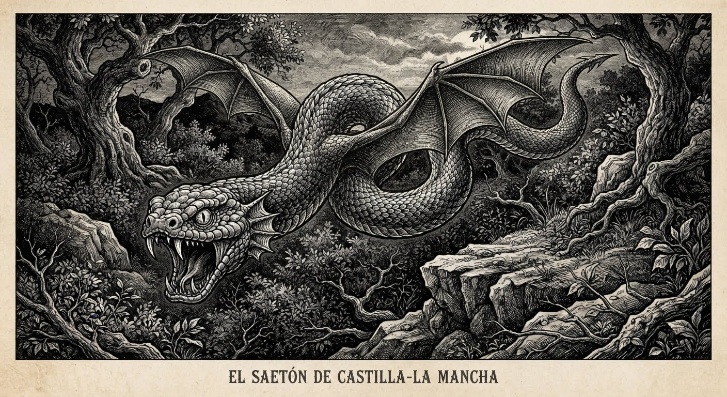
A legendary winged serpent native to southern La Mancha and Sierra Morena, famous for springing like a dart from high tree canopies to deliver a lethal bite.
- La Fiera Corrupia: A grotesque hybrid beast featuring bull horns, lion jaws, and heavy reptilian scales, born from the popular cordel chapbook literature of the 18th and 19th centuries.
- Figures of Nursery Terror: Archetypal bogeymen including the Hombre del Saco (Sack Man), the Sacamantecas, and the feared Tío Camuñas, born in the lands of Toledo and remembered as a universal warning figure for wayward children.
Murcian Mythology
The Cerigüelo
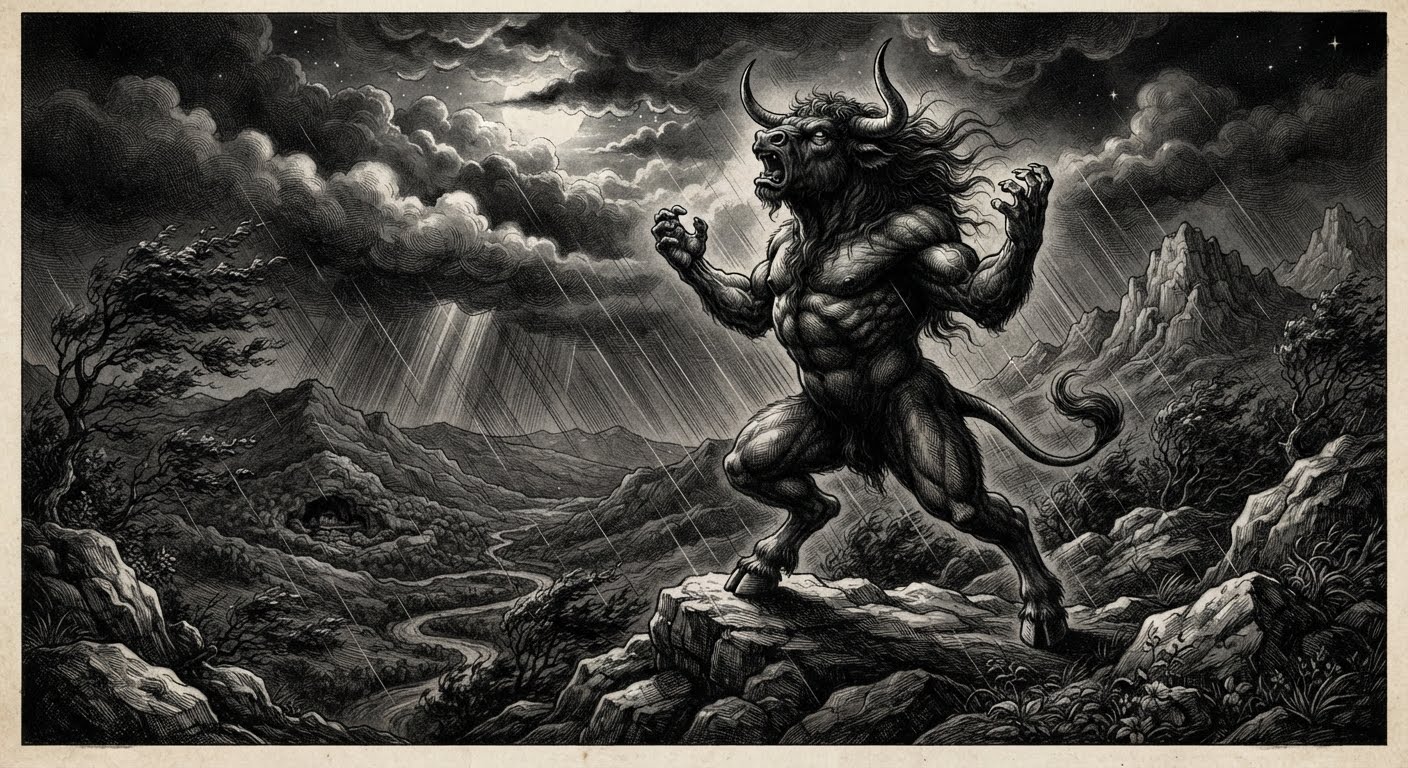
A nocturnal creature possessing the chest and fury of a black bull, roaming high slopes after dusk. Country folk in Caprés, Mula, Cehegín, and the Cueva Negra de Fortuna traditionally attributed to him the power to summon storms and bring life-giving rain to arid soils.
- Las Encantadas: Mediterranean nymphs linked to freshwater springs like the Tosquillas in Caravaca and sunken ravines, who appear only on the magical Eve of Saint John to comb their golden hair.
- Los Ratones Coloraos: Diminutive red-clad sprites who balance household pranks with kind-hearted protection for welcoming homes.
- The Demon of Archena: An eerie apparition appearing as a helpless kid goat on the slopes of Mount Ope; when hoisted onto a traveler’s shoulders, it suddenly transforms into an immensely heavy, winged fiend.


