“The madness of some is the liberty of others.”
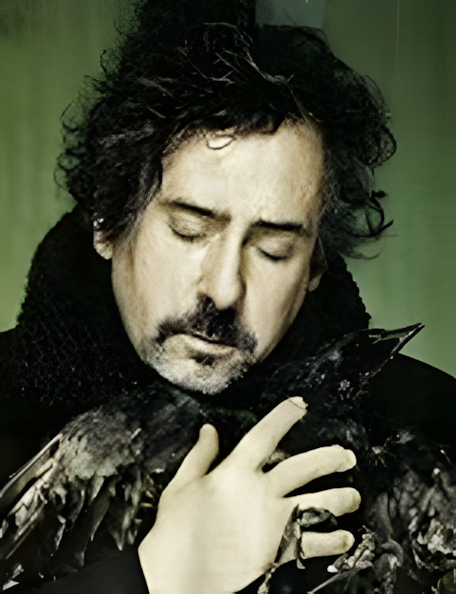
Timothy Walter Burton was born on August 25, 1958, in the Californian city of Burbank, the first of two sons born to Bill and Jean Burton. His childhood was largely defined by a penchant for performance; he and his brother would often enact parodies of grisly crimes. Burton himself was a deeply introverted child—one of his most famous personal anecdotes involves him staging a fake murder to terrify the neighbors, a prank so successful that someone actually summoned the police. This earned him the nickname “Axe Wound.” Another favorite pastime was alarming the local children with tales of extraterrestrial invasions.
Amidst these macabre games, Burton found solace in design. He displayed early talent when he won a drawing competition; his sketches were eventually featured on the city’s municipal buses. Academically, however, he never felt an affinity for reading or traditional studies. Instead, his passions lay in painting, drawing, and the cinema. He was particularly enthralled by monster movies, especially those produced by Godzilla, Hammer Productions, and the works of Ray Harryhausen and Roger Corman. Corman, in particular, often collaborated with the actor Vincent Price, whom Burton came to regard as his ultimate hero.
From a young age, Burton’s imagination was fed by comic books and vintage horror and fantasy films. He adored the cinematic adaptations Roger Corman made of one of his favorite writers: Edgar Allan Poe.
Today, as an American director, screenwriter, and producer, Timothy William Burton stands as one of the most original voices in modern Hollywood. He has crafted a singular universe defined by a love for pop-culture icons, cultural recycling, and a boundless imagination with a striking visual imprint. His stories, often laced with dark humor, almost invariably feature misfits and anti-heroes—characters in whom the author clearly sees a reflection of himself.
The 1980s: Early Days at Disney
Burton began his career as an animation apprentice at Disney, working on sketches for The Fox and the Hound (1981). In his own words, “…I was hired just when the studio was in crisis and the managers were looking to bring in new people at any price.” However, the studio would later admit that Burton’s talent was not being fully utilized. He was assigned to conceptual art for The Black Cauldron, an adaptation of the second volume of The Chronicles of Prydain. Despite his tireless efforts, Disney never quite managed to “understand” his designs, and they were ultimately discarded in the final versions of both films.
Vincent
Determined to pursue his personal vision, and emboldened by the creative freedom (and financial backing) granted by some executives, Burton began directing his first short films. In 1982, he filmed Vincent, a six-minute stop-motion animation with an unmistakably expressionist aesthetic, narrated by the legendary Vincent Price himself.
While working as a conceptual artist, Burton befriended executive Julie Hickson and Tom Wilhite, then head of creative development at Disney. Both were deeply impressed by his talent, even as the studio continued to reject his contributions to major features. In 1982, Wilhite provided $60,000 to fund an adaptation of a poem Burton had written as a children’s micro-story. Over two months, Burton collaborated with stop-motion specialists to produce the five-minute film. Shot in black and white and heavily influenced by 1920s German cinema, the film marked the beginning of a profound friendship between Price and Burton that would endure until the actor’s death in 1993. Burton would later declare that the loss of Price was “probably one of the most crucial experiences” of his life.
Vincent was originally screened alongside the teen drama Tex in a single Los Angeles theater for two weeks. It garnered significant critical acclaim at international festivals, including the Chicago Critics Film Festival. Despite its success, Disney was reluctant to market it further. Shortly thereafter, Burton worked on a live-action Japanese version of the Brothers Grimm’s Hansel and Gretel for the Disney Channel, which incorporated kung-fu elements into the children’s battle against the witch. It aired only once, on Halloween in 1982, and because no copies are known to exist, it has become something of an urban legend in Burton’s early career.
That same year, he adapted “Aladdin and the Wonderful Lamp” and “Hansel and Gretel” for the television series Faerie Tale Theatre.
Frankenweenie
In 1984, he premiered his second short film, Frankenweenie, starring Barret Oliver, Daniel Stern, and Shelley Duvall. Shot in black and white and running approximately 30 minutes, it was inspired by James Whale’s Frankenstein. The plot follows a young boy’s efforts to reanimate his beloved dog, Sparky, after the pet is struck by a car.
That same year, he wrote and illustrated a poem that would eventually provide the foundation for The Nightmare Before Christmas.
Despite earning a Saturn Award nomination, the content of the short led Disney to fire Burton immediately upon its completion, as the studio felt Frankenweenie was “too terrifying for its younger audiences.” In 1994, following the success of Beetlejuice and Batman, the short was finally released on video; it is now commonly found as bonus material on the home media releases of The Nightmare Before Christmas. In late 2007, Burton signed a contract with Disney to adapt the short into a feature-length film.
Pee-wee’s Big Adventure (1985)
This marked Tim Burton’s first feature film as a director.
Actor Paul Reubens offered him the chance to direct the cinematic version of his popular character, Pee-wee Herman, who had gained fame through his HBO specials. Thus, Burton directed his first feature as an independent filmmaker, Pee-wee’s Big Adventure. Produced on an estimated budget of $7 million, it grossed over $40 million at the box office. For the production, he recruited the eclectic guitarist and vocalist Danny Elfman to compose the score, initiating a collaboration that would span nearly all of Burton’s future projects.
Beetlejuice
After directing episodes for the revitalized Alfred Hitchcock Presents and Faerie Tale Theatre, Burton helmed his next feature, Beetlejuice, in 1988. This dark comedy centered on a recently deceased couple who, desperate to reclaim their home from new inhabitants, summon a repulsive and eccentric bio-exorcist named Beetlejuice by chanting his name three times. Starring Michael Keaton, Winona Ryder, Alec Baldwin, and Geena Davis, the film grossed approximately $80 million and won an Academy Award for Best Makeup.
The success of Beetlejuice catapulted Tim Burton out of anonymity, establishing him as a director with an undeniable gift for constructing singular, visually arresting stories.
Batman
In 1989, Burton was offered the helm of a colossally budgeted adaptation of the fictional hero Batman. However, the experience was far from entirely satisfactory for the filmmaker, who found himself in frequent disputes with producers Jon Peters and Peter Guber. The primary point of contention was the casting of Michael Keaton in the title role. At the time, the choice was seen as highly controversial given Keaton’s background in comedy rather than action. The backlash from comic book fans was so intense that Warner Bros. shares actually saw a decline in value. Burton, however, felt it would be ridiculous to cast a traditionally “muscular” actor; he insisted that Batman should be an “ordinary, wealthy man who used a secret identity and a complex bat-costume to strike fear into the hearts of criminals.” To play the Joker, he chose Jack Nicholson. When the film finally premiered, it became the biggest box-office hit of its time, grossing over $400 million worldwide. Furthermore, the gothic aesthetic Burton envisioned for Gotham City was eventually adopted by the comics themselves.
The 1990s
Edward Scissorhands
In 1990, Burton co-wrote the screenplay for Edward Scissorhands with Caroline Thompson. The character, an unfinished creation of an eccentric inventor (played by Vincent Price), would be portrayed by Johnny Depp—marking the beginning of a long and fruitful collaboration between the two, which would continue through films like Ed Wood, Sleepy Hollow, Charlie and the Chocolate Factory, Corpse Bride, and Sweeney Todd. Edward appeared human but remained unfinished after his creator’s sudden death, leaving him with shears instead of hands. Set in an idealized version of the suburbs—it was filmed in Florida—the movie is often regarded as Burton’s autobiography, a reflection of his own childhood in suburban California. Vincent Price once remarked that “Tim is Edward.” This sentiment was echoed by Johnny Depp in his prologue to Mark Salisbury’s Burton on Burton.
Edward Scissorhands is considered by many fans and critics to be Burton’s finest work. It showcases his signature aesthetic through a series of striking visual compositions—extreme sets, bold colors, and intricate character designs. It represents his visionary take on innocent romanticism: a story of a young man who knows nothing of love, yet whose journey ends in a deeply moving and unforgettable narrative.
Batman Returns
Although Warner Bros. had initially been hesitant to produce Edward Scissorhands (even after the success of Batman), Burton eventually agreed to direct a sequel on the condition that he be granted total creative control. The resulting film, Batman Returns, featured Michael Keaton reprising his role alongside Danny DeVito (The Penguin), Michelle Pfeiffer (Catwoman), and Christopher Walken. Even more gothic and personal than its predecessor, the film faced criticism from those who felt its content—particularly the fetishistic style of Catwoman’s costume and the overall dark tone—was too intense for children. Despite the controversy, Batman Returns grossed approximately $160 million—a success, though less than what the producers had anticipated.
The Nightmare Before Christmas
Burton had originally intended to write and illustrate a book of poetry and animated characters for children. Instead, in 1993, he produced a feature film based on that concept—though he could not direct it himself due to his commitment to the Batman franchise. The plot revolves around Jack Skellington, the Pumpkin King of Halloween Town, and his misguided attempt to become a benevolent Santa Claus (or “Sandy Claws”). When Jack and the residents of Halloween Town transform Christmas into a nightmare, Jack eventually realizes he must return to his roots as the master of fright. Directed by Henry Selick and based entirely on Burton’s story and characters, The Nightmare Before Christmas was not an immediate runaway hit but eventually achieved legendary cult status. Burton would later collaborate with Selick again to produce another stop-motion feature, James and the Giant Peach (1996).
Ed Wood
In 1994, Burton released Ed Wood, a biographical tribute to Edward D. Wood Jr., often cited as “the worst director of all time.” Starring Johnny Depp, the film is a loving homage to the low-budget horror and sci-fi movies Burton had watched as a child. Wood was known for his cardboard sets, wooden acting, and clumsy characters. Nevertheless, Burton saw in Wood a visionary spirit akin to Orson Welles. Filmed in black and white and featuring Martin Landau in a superb, Oscar-winning performance as Bela Lugosi, the film also starred Bill Murray and Lisa Marie. It is widely considered one of the director’s most accomplished works.
Because of their frequent collaborations during The Nightmare Before Christmas, Danny Elfman opted not to score Ed Wood; the task fell instead to Howard Shore. Although a commercial failure at the time of its release, the film was hailed by critics and revitalized interest in Wood’s filmography.
Batman Forever
Despite his interest in continuing with the Batman franchise, Warner Bros. decided that Batman Returns had been too dark. The studio turned to Joel Schumacher (The Client) to direct the third installment, while Burton remained on as a producer. Following the change in directors, Michael Keaton stepped down from the role, and Val Kilmer was cast in his stead. The film featured a star-studded cast including Tommy Lee Jones (Two-Face), Nicole Kidman (Chase Meridian), Chris O’Donnell (Robin), and Jim Carrey (The Riddler). By blending the darkness of the previous films with Schumacher’s neon-soaked aesthetic, the movie became a massive commercial success, grossing over $336 million.
James and the Giant Peach
Produced by Burton and directed by Henry Selick in 1996, this Walt Disney animation was based on the book by Roald Dahl. Like The Nightmare Before Christmas, it utilized the stop-motion technique. The story follows James, an orphan who discovers a group of giant talking insects living inside a massive, magical peach, with whom he embarks on an adventure to New York.
Mars Attacks!
Drawing deeply from 1950s kitsch iconography, Burton’s next project was Mars Attacks!, which reunited him with Danny Elfman. Based on a series of sci-fi trading cards, the film was a hybrid of 1950s fantasy and 1970s disaster cinema. By sheer coincidence, it became an unintentional parody of Independence Day, which was filmed simultaneously and released five months earlier. Despite a stellar cast including Jack Nicholson, Pierce Brosnan, Michael J. Fox, Sarah Jessica Parker, Natalie Portman, and many others, it was largely dismissed by critics and ignored by American audiences. However, it found success in Europe and has since developed a dedicated following.
Sleepy Hollow
Released in 1999, Sleepy Hollow featured supernatural landscapes, unique set designs, and another starring turn by Johnny Depp as Ichabod Crane—here reimagined as a detective interested in forensic science. Based on the story by Washington Irving, the cast included Michael Gambon, Ian McDiarmid, Miranda Richardson, Christopher Walken, and Christina Ricci as Katrina Van Tassel. Burton altered the original ending, allowing Ichabod to survive and find love. The film was well-received, winning an Academy Award for Best Art Direction and two BAFTAs.
Following a change in his personal life—separating from Lisa Marie—Burton shifted his style for his next project, leaving behind enchanted forests for the reimagining of Planet of the Apes (2001).
The 2000s
Planet of the Apes
A commercial success, grossing $68 million in its opening weekend, the film marked the first time Helena Bonham Carter appeared in a Burton production.
Big Fish
In 2003, Burton directed Big Fish, written by John August. The film received four Golden Globe nominations and featured Ewan McGregor, Albert Finney, and Jessica Lange. Steven Spielberg had originally been slated to direct, but Burton took over the project following the death of his own father—a loss that deeply informs the film’s themes of reconciliation between father and son.
Charlie and the Chocolate Factory
Released in 2005, the film was a major box-office success, grossing over $207 million in the United States alone. Johnny Depp’s portrayal of Willy Wonka drew comparisons to several pop-culture figures, though the actor maintained his inspiration came from vintage children’s television hosts.
Corpse Bride
Based on a Russian-Jewish folk tale, the story follows Victor, who accidentally proposes to a deceased bride named Emily while practicing his wedding vows in a forest. Depp provided the voice for Victor, while Helena Bonham Carter voiced Emily.
Sweeney Todd: The Demon Barber of Fleet Street
In 2007, Burton finally realized long-held ambitions to adapt Stephen Sondheim’s musical for the screen. Starring Johnny Depp and Helena Bonham Carter, the film required significant editing to condense the three-hour musical into a two-hour feature. It was released to critical acclaim in late 2007.
The 2010s
Alice in Wonderland
Released in 2010, this adaptation of Lewis Carroll’s novels utilized 3D technology and starred Mia Wasikowska as Alice, Johnny Depp as the Mad Hatter, and Helena Bonham Carter as the Red Queen.
Dark Shadows
In 2012, Burton released a cinematic adaptation of the popular 1970s television soap opera. The film blended Burton’s signature gothic elements with the specific style of the 70s.
Abraham Lincoln: Vampire Hunter
Burton produced this 2012 film, based on the novel by Seth Grahame-Smith, which reimagines the 16th U.S. President as a silver-axe-wielding hunter of the undead.
Frankenweenie (Feature Film)
In 2012, Burton revisited his 1984 short film, adapting it into a full-length stop-motion feature shot in black and white 3D.
Big Eyes
Released in 2014 and starring Christoph Waltz and Amy Adams, the film tells the true story of Margaret and Walter Keane, whose paintings of large-eyed children became a phenomenon in the 1950s and 60s.
Miss Peregrine’s Home for Peculiar Children
An adaptation of Ransom Riggs’ novel, released in 2016, the film follows Jacob Portman (Asa Butterfield) as he discovers a secret home for children with extraordinary abilities.
Dumbo
In 2019, Burton directed the live-action remake of the Disney classic, starring Colin Farrell, Michael Keaton, and Eva Green.
The 2020s
Wednesday
In late 2022, Burton made his major television debut with Wednesday for Netflix, a series based on the iconic character from The Addams Family.
Curiosities regarding “The Nightmare Before Christmas”
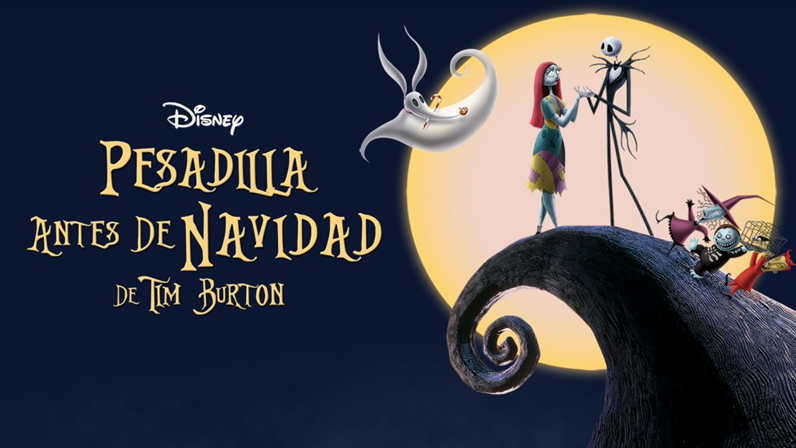
“Everyone said they liked it, but not enough to make it at that time. I guess that was my first brush with that kind of movie-world mentality: a huge smile and an ‘Oh, of course we’re going to do it!’ But as you keep going, it slowly stops being a reality.” — Tim Burton
In 1982, Tim Burton wrote a three-page poem titled The Nightmare Before Christmas, drawing influence from the festive TV specials Rudolph the Red-Nosed Reindeer and Chuck Jones’ How the Grinch Stole Christmas!. He initially envisioned it as a television special narrated by Vincent Price.
A decade later, after Burton had established himself as a successful filmmaker away from the constraints of Disney, his agent contacted the studio to retrieve the project. Disney, seeing the massive success of Batman (1989), suddenly found “400 million reasons” to back the risky stop-motion film.
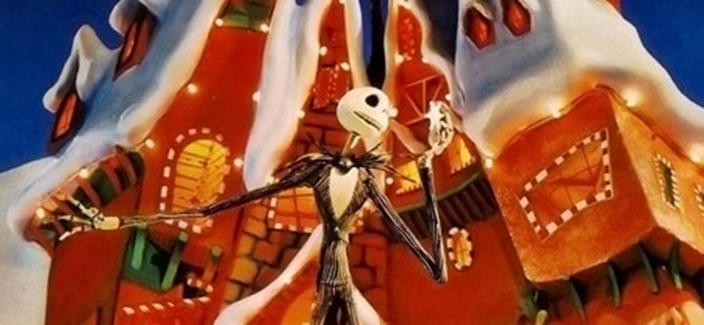
Because Burton was already committed to Batman Returns (1992), he could not direct the project himself, delegating the task to his former Disney colleague Henry Selick.
A Burton Film… Without Burton?
Despite Selick’s direction, Burton had developed the project so thoroughly that it remained unmistakably his. For instance, to film just five seconds of stop-motion footage, up to a week of shooting can be required.
Danny Elfman, who has scored nearly all of Burton’s films, collaborated closely with the director to develop the songs. Elfman became so invested in the production that he provided the singing voice for Jack Skellington, while Chris Sarandon provided the character’s dialogue.
With a production that began in July 1991 and lasted over two years, a team of 120 people occupied 20 different soundstages to bring the world to life.
As is typical for Burton, Jack Skellington is a hero in the vein of Pee-wee or Edward—an outcast seeking answers to his existential questions. His accidental visit to the hyper-colorful world of Christmas triggers a collision between his inherent gothicism and a joyful reality he does not understand. In his misguided attempt to usurp Santa’s role, Jack eventually finds his own way home.
The film stands as a perfect synthesis of fabulous character design, Burton and Selick’s refusal to adhere to traditional Disney animation patterns (many characters, including Jack, notably lack eyes), and infectious music that remains a delight to this day.