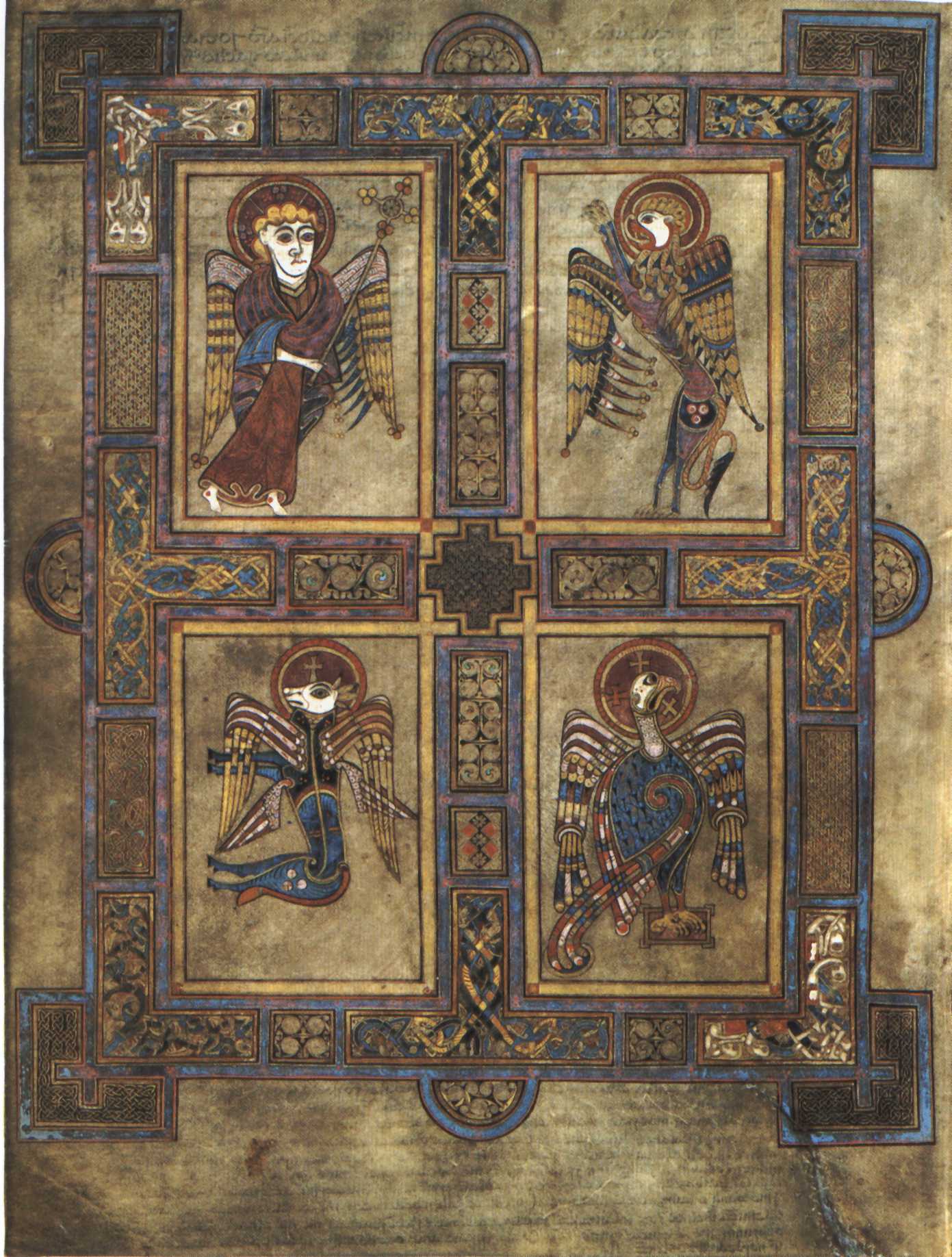
It is an illuminated manuscript containing the four Gospels of the Christian New Testament, currently held at Trinity College, Dublin (Ireland).
It is the most famous of all medieval illuminated manuscripts due to the complexity, detail, and majesty of its illustrations.
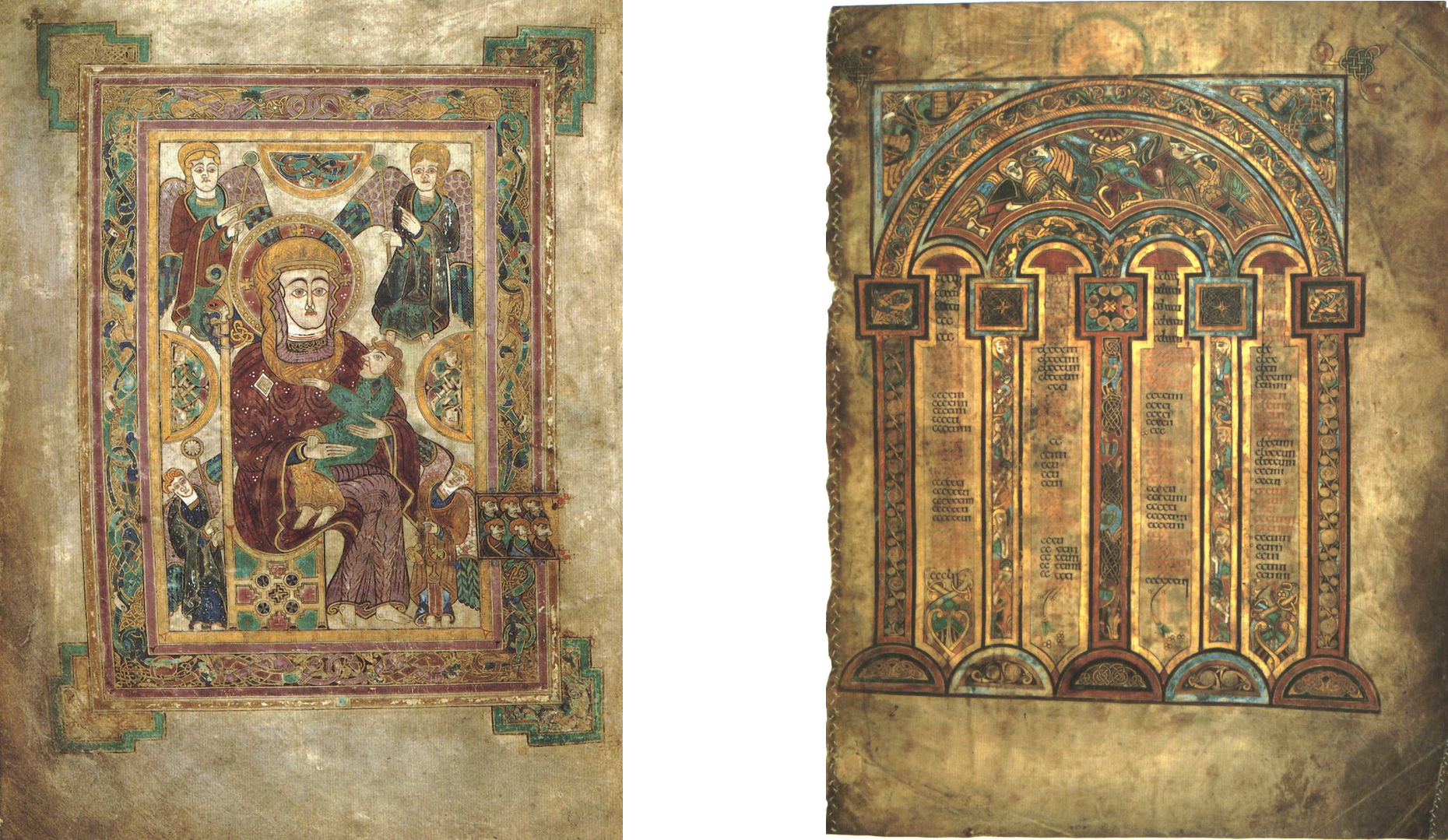
The beauty of the lettering, the portraits of the Evangelists, and other images—often framed by intricate Celtic knotwork—have been praised by writers throughout the centuries. Scholar Thomas Cahill notes that “as early as the 12th century, Gerald of Wales was forced to conclude that the Book of Kells was ‘the work of an angel, not of a man’” because of its majestic illustrations. Today, the letters illuminating the Chi-Rho (Christ’s monogram) are considered “more [living] presences than letters” on the page due to their beauty. The creators of the Book of Kells focused on the visual impression the work would make, placing artistic design at the heart of the project.
Origin and Purpose
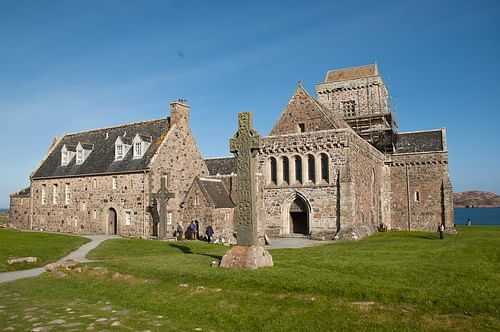
The Book of Kells was produced by monks of the Order of Saint Columba on Iona, Scotland, though exactly where it was made is a subject of debate. Theories regarding its composition range from its creation on the island of Iona to Kells in Ireland, or Lindisfarne in Great Britain. Most likely, it was created at least in part on Iona and then moved to Kells for safety from Viking raiders, who first attacked Iona in 795 AD, shortly after their assault on Lindisfarne Priory.
A Viking raid in 806 AD killed 68 monks on Iona and led the survivors to abandon the abbey in favor of another belonging to the order in Kells.
Scholars have concluded that the book was created for use during the celebration of Mass, though it was likely not read but rather displayed to the congregation.
This theory is supported by the fact that the text is often carelessly written, contains several errors, and, at times, the illustrations appear to be an afterthought. Most likely, the priests using the book had already memorized the biblical passages and recited them while holding the book, without needing to read the actual text.
It is believed that the Book of Kells was the altar manuscript that may have been first used in services on Iona and was certainly used at Kells Abbey. The illustrations and brilliantly colored illuminations would have made it an exceptionally impressive piece for a congregation, adding visual emphasis to the words the priest recited while showing the book to the people—much like how a picture book is read to a young child today.
Appearance and Content
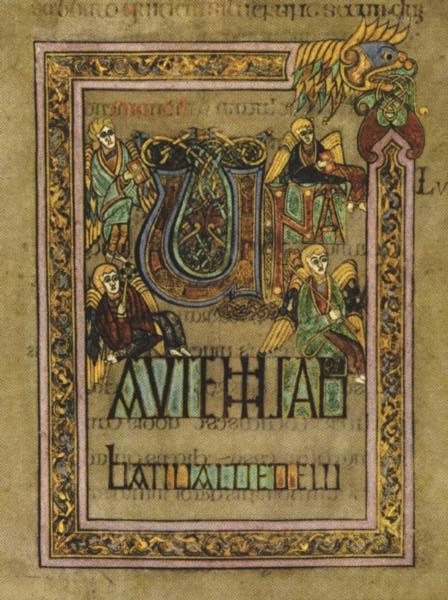
The book measures 33x25 cm (13x10 inches) and consists of vellum pages decorated with painted images accompanied by Latin text written in insular script in various ink colors. It includes the complete Gospels of Matthew, Mark, and Luke, and part of John, as well as indexes, cross-references, summaries, and commentaries. It was originally bound with a cover of gold and jewels, which was lost when the manuscript was stolen from the abbey in 1007. The ornate binding, front and back, was ripped away by the thieves, which also led to the loss of some end leaves, and it is possible that the final part of the Gospel of John was lost at that time.
It is also possible that John was never copied in its entirety. Evidence suggests that the Book of Kells is an unfinished manuscript. There are blank pages, and some illustrations are missing (though they may have been lost). The work was performed by three distinct anonymous scribes who are today identified only as Hand A, Hand B, and Hand C. It was common for more than one scribe to work on a manuscript—even on a single page.
Illustration and Decoration
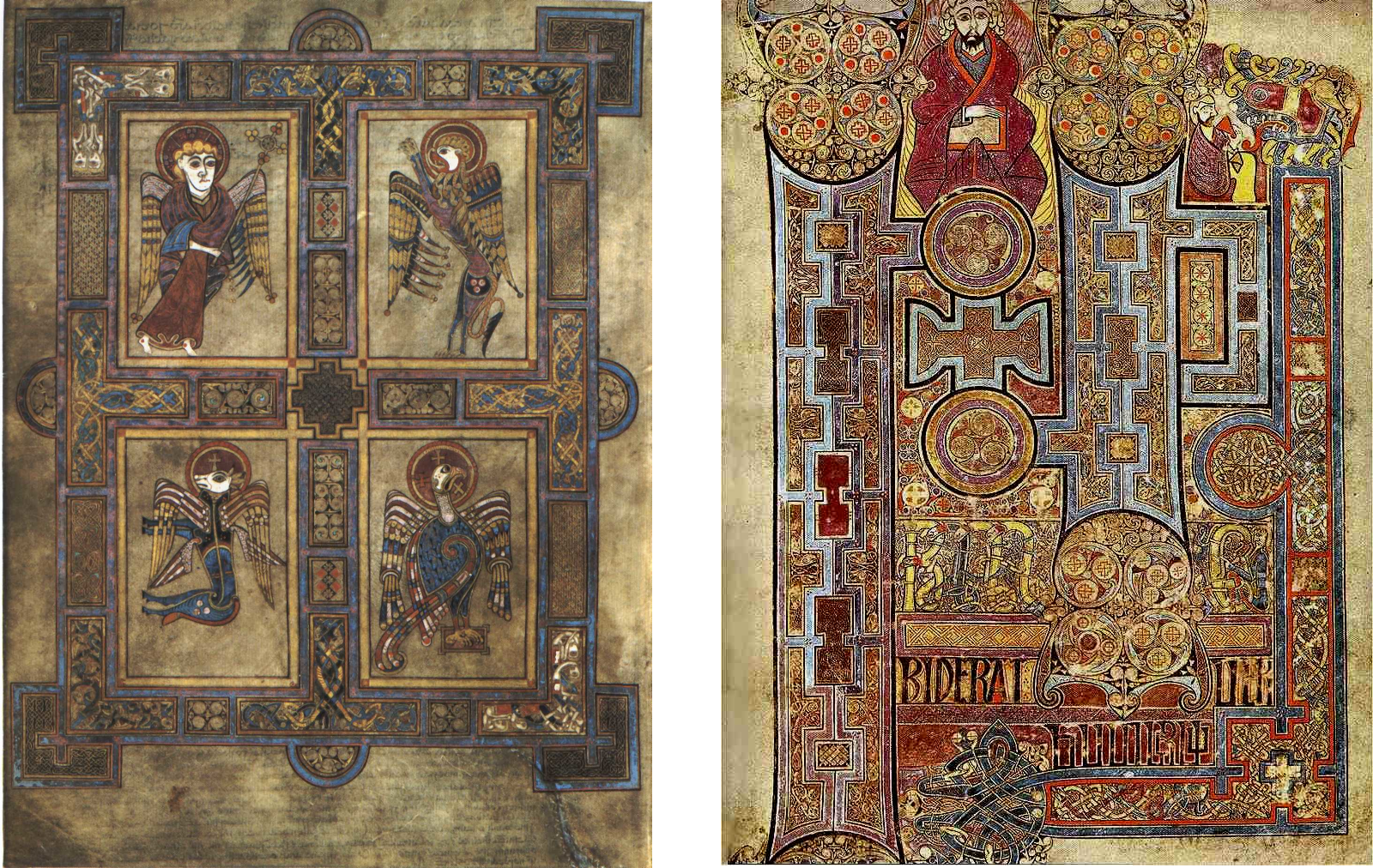
The images in the Book of Kells (and other illuminated manuscripts) are called miniatures.
The artists who painted these works were known as miniaturists, and later as illustrators. The illustrator would begin with a sheet of vellum on which the text had usually already been written. The monk would rub the part of the page he was to work on with clay or fish-glue adhesive, or with “a mixture of ox gall and egg albumin, or by rubbing the surface with a cotton ball moistened in a dilute solution of glue and honey.” Once the surface was prepared, the monk would prepare his brushes (which were made of squirrel tail hair pressed into a handle), as well as his pens and paints, and set to work. Errors in the image were erased by rubbing with breadcrumbs.
Surprisingly, and despite the prestige the monks wished to bestow upon the work, they did not use gold or silver leaf to adorn the manuscript. The pigments required for the illustrations were imported from all corners of Europe and were the subject of deep study: black was obtained from candles, bright red from realgar, yellow from orpiment, and emerald green from pulverized malachite. The extremely expensive lapis lazuli, which provided the blue coloration, came from northeastern Afghanistan.
The miniatures are richer and more numerous than in any other biblical manuscript from Great Britain. It consists of ten full-page miniatures that have survived the test of time, in addition to two portraits of Evangelists, three representations of the four symbols of the Evangelists, a page whose motifs resemble a tapestry, a miniature of the Virgin and Child, another of Christ on the throne, and finally, two miniatures dedicated to the trial and temptation of Jesus. Furthermore, there are thirteen other pages full of miniatures accompanied by brief text, notably at the start of each Gospel. Eight of the ten pages dedicated to the Eusebian Canons are also richly illustrated. In addition to all these pages, the work contains a large number of smaller decorations and illuminated initials.
Errors
There are several differences between the text of the Book of Kells and the standard accepted version of the Gospels. For example:
- In the genealogy of Jesus, which begins in Luke 3:23, Kells erroneously names an additional ancestor.
- In Matthew 10:34b, it should read “non veni pacem mittere, sed gladium” (I have not come to bring peace, but a sword). However, instead of “gladium” (“sword”), the Kells manuscript has written “gaudium” (“joy”); thus, the translation becomes “I have not come to bring peace, but joy.” This was likely a distraction of the copyist.
Exhibition
Today, the manuscript is on permanent exhibition in the library of Trinity College Dublin (Ireland), under the reference MS 58.
Sources: The Book of Kells - World History Encyclopedia (worldhistory.org)