“To the people whose labors go beyond ideas into the realm of ‘real materials’—to the dry-land ecologists, wherever they may be, in whatever time they work, this effort at prediction is dedicated in humility and admiration.”
— Frank Herbert
Frank Herbert, the author of the novel published in 1965, created what is widely considered the greatest science fiction novel of all time. Without this work, many others such as Star Wars, Harry Potter, and The Lord of the Rings might not exist in the form we know them today.
Dune was a resounding success; in 1966 it won the Hugo Award, and in 1965 it received the inaugural Nebula Award for Best Novel. Published in Spanish by Acervo in 1975, it launched one of the most important sagas in fantasy and science fiction literature. By 2007, it had sold over 12 million copies, making it the best-selling science fiction novel to date.
Herbert continued the saga with Dune Messiah (1969) and Children of Dune (1976), completing his intended trilogy. The success of the trilogy led him to write a fourth book, God Emperor of Dune (1981). Years later, he returned to the series with Heretics of Dune (1984) and Chapterhouse: Dune (1985), leaving the ending completely open for a future installment.
Following his death, his son Brian Herbert, in association with Kevin J. Anderson, expanded the universe with Prelude to Dune (1999–2001) and Legends of Dune (2002–2004), as well as two novels that concluded the original saga: Hunters of Dune (2006) and Sandworms of Dune (2007).
Plot
The story begins more than 10,000 years in the future, in our galaxy, within a great galactic empire with a feudal structure. The Empire is divided into quasi-fiefdoms or planetary holdings controlled by noble families known as the Great Houses. These houses belong to a council called the Landsraad and pay tribute to the Padishah Emperor Shaddam IV of House Corrino. Another key institution is the CHOAM (Combine Honnete Ober Advancer Mercantiles), a universal corporation for commercial development controlled by the Emperor and the Great Houses, with the Spacing Guild and the Bene Gesserit Sisterhood as non-voting partners.
The key to trade and imperial stability lies in space travel, a monopoly held by the Spacing Guild. Their “Guild Navigators” are mutated humans who use the spice “melange” to exercise their prescient powers, allowing them to chart safe courses through folded space and travel instantaneously across the galaxy.
The Bene Gesserit, a powerful all-female order dedicated to the preservation and progress of the human race, also utilizes the spice. They are often called “witches” due to their mental and physical powers, developed through “Prana-bindu” conditioning. Their training allows acolytes to survive the “Spice Agony,” a trial where they ingest an illuminating poison and must transform it internally to remain unharmed. Survival awakens the “Other Memories”—the personalities and memories of all their female ancestors. However, they are warned against “the place where we cannot look,” where male ancestral memories reside. This led to their millenary genetic program: the search for a male equivalent to a Bene Gesserit, whom they call the Kwisatz Haderach (“The Shortening of the Way”). This individual would have access to both male and female memories and bridge space and time through mental power, allowing the Sisterhood to guide humanity more effectively.
Melange, the key to all plans for control of the Empire, is found only on one desert planet: Arrakis, also known as Dune. It is a hostile ecosystem inhabited by the Fremen, scattered tribes who harvest the spice produced as part of the life cycle of the giant sandworms that rule the desert. Fremen culture revolves around the conservation of water. The Bene Gesserit’s Missionaria Protectiva has implanted religious myths among the Fremen to prepare for the arrival of a Messiah—a savior who will transform their arid world into a paradise.
Film and Television
Attempts to bring Dune to the screen began in the 1970s. The first theatrical release was David Lynch’s 1984 version, which received mixed reviews but has since become a cult classic. At the time, technology was not yet advanced enough to fully capture the scope of the novel. A later 2021 version, directed by Denis Villeneuve and delayed by the COVID-19 pandemic, was split into two parts. This adaptation emphasizes the visual grandeur (crafted by the team behind Blade Runner 2049), with stunning landscapes, ship designs, and special effects. The cinematography by Greig Fraser and the exceptional score by Hans Zimmer elevate the experience, though viewers who haven’t read the books may find the complex terminology challenging.
The Great Houses
1. House Atreides
 House Atreides is one of the Great Houses of the Known Universe. Its members play a central role throughout the saga. The novel suggests the family traces its roots back to the mythological Greek House of Atreus. They rule the planet Caladan and are known for their nobility, justice, and the unconditional loyalty they inspire in their people. Their primary industry is Pundi rice, along with fishing and yacht construction. The Atreides colors are green and black, and their symbol is a red hawk.
2. House Harkonnen
 House Harkonnen is the ancestral enemy of House Atreides. The name has Finnish roots (härkä means “bull”). Their symbol is a blue griffin. The family’s rise to power is marked by ambition and cruelty. Their home planet, Giedi Prime, was once rich in resources but has been overexploited into an industrial wasteland. In addition to spice production on Arrakis, they are known for blue obsidian mining and Harkonnen black beer.
3. Imperial House Corrino
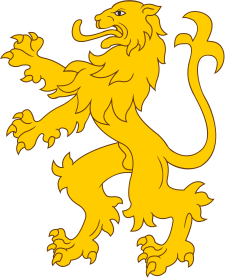 The ruling house of the Empire, founded after the Battle of Corrin. Their ancestral seat was Salusa Secundus, but after an atomic attack, they moved the Golden Lion Throne to Kaitain. Salusa Secundus became the Imperial Prison Planet, where harsh conditions forged the Sardaukar—the most feared fanatical warriors in the universe. The Corrino family is characterized by calculating ambition and internal conspiracies.
4. The Bene Gesserit
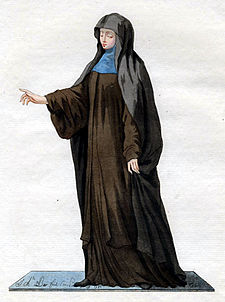 An all-female order with extraordinary physical and mental conditioning. Trained on the planet Wallach IX, they serve as concubines, Truthsayers, and religious engineers throughout the Empire. Their martial arts skills make them formidable in hand-to-hand combat.
5. Fremen
The free tribes of Arrakis. Descended from Zensunni Nomads, they transformed into a society built for survival in the harshest environment. Their name is a shortening of “Free Men.”
Television Series
Two miniseries were produced by the Sci-Fi Channel: Dune (2000) and Children of Dune (2003). A spin-off series focusing on the Sisterhood, titled Dune: Prophecy (formerly The Sisterhood), has also been developed for HBO Max.
Comics and Video Games
Marvel published a comic adaptation of the David Lynch film with art by Bill Sienkiewicz, noted for its hyper-realistic likenesses of the actors. In the realm of gaming, Dune (1990) by Virgin Interactive blended graphic adventure with strategy. Dune II (1992) by Westwood Studios is considered a landmark in real-time strategy (RTS) gaming, introducing the choice between three houses: Atreides, Harkonnen, and Ordos. Later titles include Dune 2000 (1998) and Emperor: Battle for Dune (2001).